
 +99871 200 32 00
 info@tangroup.uz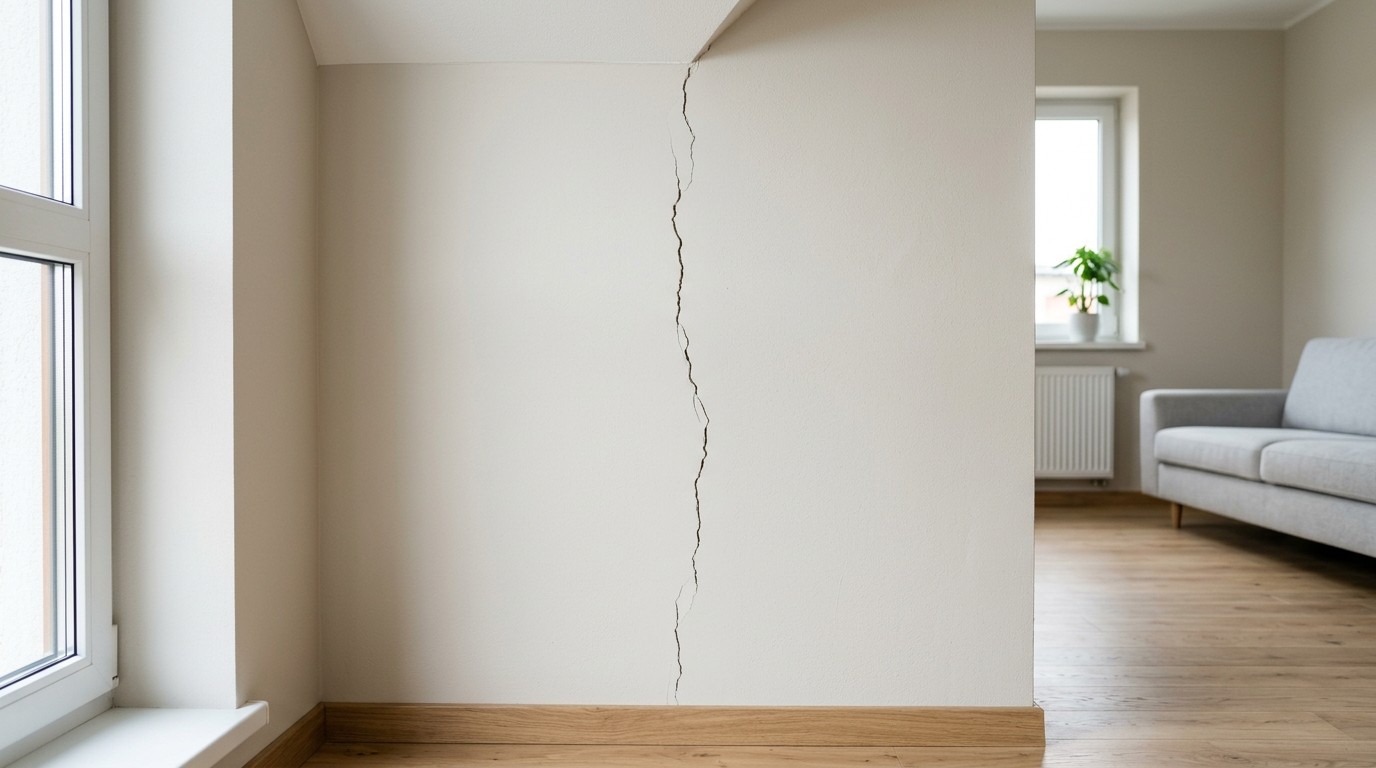
Discovering cracks on the walls of a newly built house can be deeply concerning for any homeowner. However, not all cracks indicate a structural hazard; some are merely cosmetic. Understanding the technical and physical reasons behind this phenomenon is essential for choosing the correct solution and preventing future budget drains.
Natural House Settlement and Soil Behavior
Every newly constructed building undergoes a process of natural settlement during its first two to three years. Under the sheer weight of the structure, the foundation sinks slightly into the ground to find its balance. If soil analysis was conducted properly, this settlement occurs evenly and causes no harm. However, when foundation designs fail to match the soil type, uneven settlement takes place, creating high stress in structural elements and resulting in prominent diagonal cracks.
Material Quality and Incompatibility
Often, wall cracks are caused by the properties of the finishing materials rather than the foundation. Different materials, such as concrete, bricks, plaster, and gypsum, expand and contract differently under temperature and humidity changes. Using low-quality plaster mixtures or failing to maintain the correct water-to-cement ratio leads to brittle surfaces. Additionally, if the plaster dries too quickly due to drafts or excessive indoor heat, it will inevitably crack.
Technological Errors and Construction Haste
Skipping essential steps during construction and finishing is a major cause of wall damage. Common technological mistakes include:
- Applying paint or wallpaper before the underlying plaster has fully dried;
- Omitting reinforcing mesh at the joints of different materials;
- Poor block laying techniques without proper joint interlocking.
Preventing these issues requires working with experienced builders and structural engineers from the very beginning. If you notice cracks in your home, it is highly recommended to monitor them using paper or glass markers and consult specialists to determine the best course of action.